Most beginners focus on wattage. They see 80W and assume it must outperform 60W. That’s not exactly how it plays out on the bench.
When you’re actually soldering, the real test happens the moment the tip touches the copper. Heat gets pulled away instantly. Remember the 1–3 second rule. For most electronics work, proper contact time is short, about 1 to 3 seconds.
That window tells you almost everything about your setup. If the station can’t compensate fast enough, tip temperature collapses, and everything slows down.
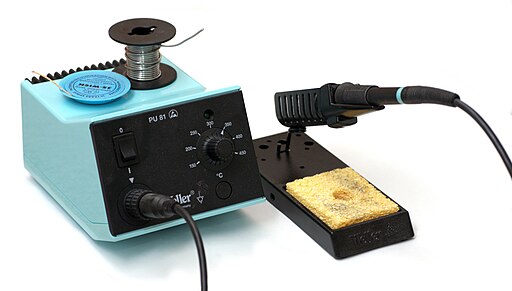
Factors that Affect Performance
A good soldering station is defined by how stable and responsive it is under load. In practice, three factors make or break the performance.
- Thermal recovery
- Regulation stability
- Tip construction
1. Thermal Recovery
You don’t notice recovery when it works. You notice it when it fails.
Try soldering a ground plane, a thick connector, or a multilayer board. If the tip temperature drops sharply, the solder stops flowing smoothly. Wetting becomes sluggish. Then you instinctively stay on the joint longer, which can sometimes damage the pads.
Two stations with identical wattage can behave completely differently. One barely sags. The other collapses and climbs back slowly. The difference? Heater design and control response.
Brands like Hakko and Weller built reputations on predictable recovery. Not because of big numbers, but because their heater and control design are consistent.
2. Temperature Regulation
A soldering station is a closed-loop thermal system. A sensor measures tip temperature, a controller adjusts power, and the heater responds.
If that loop is slow or poorly tuned, you’ll see overshoot, oscillation, or lag. That instability stresses tips and disrupts flux performance.
Good regulation is subtle but noticeable. Joints feel consistent. Repetitive work is predictable. The station behaves the same as when you started.
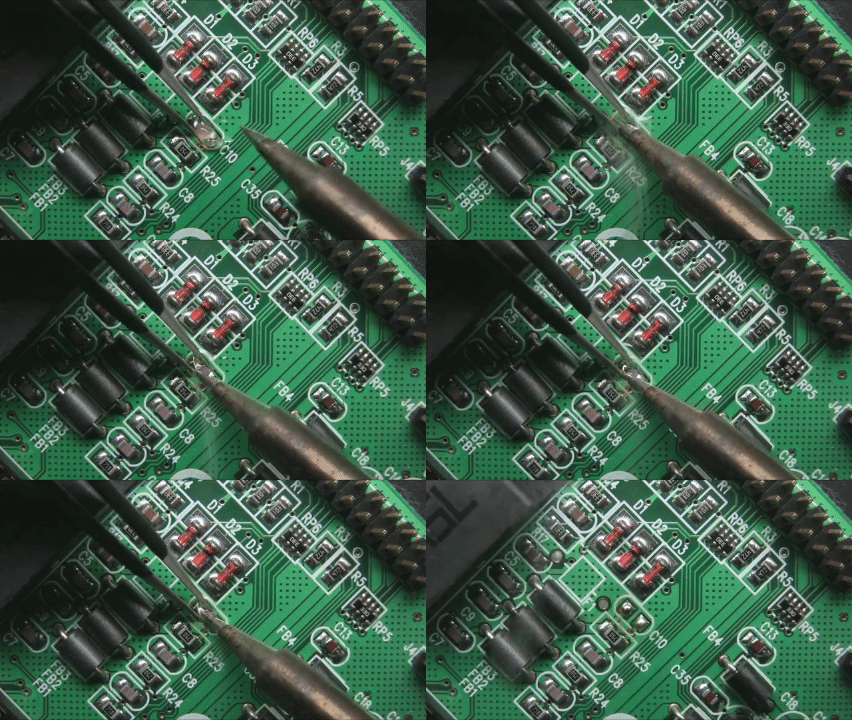
3. Tip Quality
The tip is where heat actually enters the joint. If the interface is poor, wattage doesn’t matter. Tip construction affects:
- Thermal conductivity
- Oxidation resistance
- Plating durability
As plating wears, heat transfer drops. Many operators respond by increasing the temperature, which accelerates wear.
Find high-end cartridge systems, like JBC stations, that integrate the heater and sensor into the tip, reducing thermal lag. They are excellent for dense boards or high-volume work, but unnecessary for light hobby use.
What Actually Matters When Selecting a Station
For students and general electronics work, prioritize:
- Stable closed-loop control
- Reliable thermal recovery
- Readily available replacement tips
- ESD-safe design
Mid-tier stations from Hakko or Weller often deliver predictable performance without industrial prices that are excellent for students, hobbyists, and general prototyping. Stations from YIHUA and FNIRSI can also deliver surprisingly capable performance and features, and they often include a large selection of soldering tips.
If you routinely solder large copper areas or dense multilayer boards, faster-response cartridge systems justify the cost.
Rule of thumb: Match your tool to your workload.
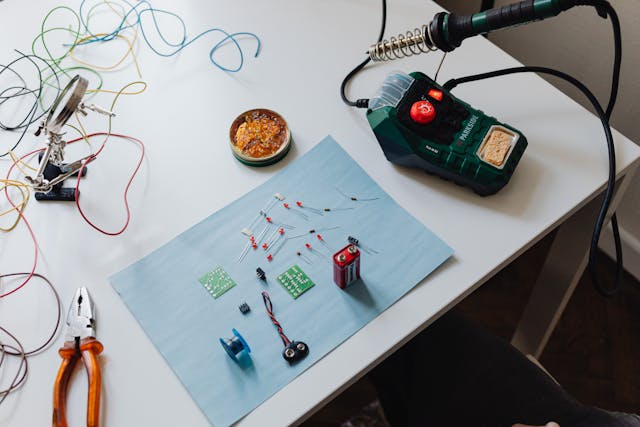
Don’t forget the build quality and component stability
Avoid low-cost stations that often use thin heaters or poorly calibrated sensors. At first, everything may seem fine. The tip reaches temperature quickly. But over time, the heater loses efficiency, or the sensor drifts. This is actually very common to cheap or poorly designed stations, where the tip and heater are loosely integrated.
Common Technical Misdiagnosis
If solder doesn’t flow at standard working temperatures (~330–370°C for leaded solder), the problem is rarely “not hot enough.”
It’s usually:
- Weak thermal recovery
- Oxidized or worn tip
- Poor tip geometry
- Inadequate regulation
Cranking the temperature masks the problem while reducing reliability. A stable system lets you solder efficiently at controlled heat. That protects pads and components.
Also, long dwell time is what damages pads, not wattage alone. The longer the heat sits there, the more stress the board absorbs.
Another thing to consider is that tip geometry is also more important than people realize. Many people (including me) default to needle tips because they “look precise,” and it’s easy to reach tight spaces and maneuver around small components. But sometimes you may need to use a small chisel tip (which is often better for general PCB work) because it provides more surface contact, transfers heat faster, and reduces dwell time.
When Does Wattage Actually Make a Difference
You’ve probably seen charts suggesting:
- 15–30W for hobby electronics
- 40–60W for general work
- 60W+ for professional tasks
At first glance, it makes sense. More wattage seems like “more power = better soldering.” But remember that higher wattage doesn’t automatically or always make a soldering station “better.” However, here’s why it matters in certain real-world situations.
1. Large, Heat-Sinking Components
Think thick connectors, ground planes, or battery tabs. These components act like heat sinks, pulling energy from the tip as soon as it touches.
A higher-wattage station has more power in reserve, so the tip doesn’t drop in temperature. Solder flows smoothly, joints wet properly, and you don’t have to linger on pads, which protects traces from lifting.
2. Dense or Multilayer Boards
More copper layers = more heat being pulled away. Low-wattage stations can sag under this load, forcing you to increase dwell time. A well-designed high-wattage station maintains tip temperature and prevents that stress, keeping soldering predictable and reducing rework.
3. Repetitive or Production Work
If you’re soldering dozens of joints in sequence, tip recovery speed becomes critical. Higher wattage, combined with stable temperature control, ensures each joint behaves the same as the last. It keeps your workflow consistent and your joints reliable.
4. High-Performance Tip Systems
Some cartridge-based systems integrate the heater and sensor directly into the tip. Extra wattage here doesn’t just sound good on paper — it actually translates into rapid, precise thermal response.
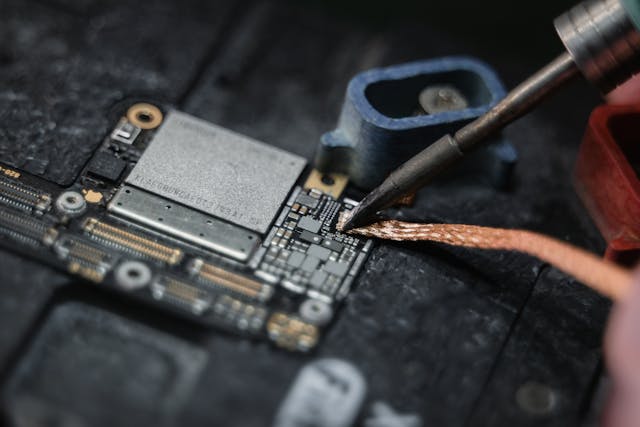
When High Wattage isn’t Needed
In delicate electronics, where soldering fine-pitch SMD, thin traces, and sensitive ICs, you don’t want aggressive thermal overshoot or uncontrolled spikes. Excessive power can actually reduce fine control.
Modern stations regulate well, but ultra-high wattage systems (up to 200W) are often designed for heavy connectors, industrial wiring, or chassis work. I mean, you don’t want to use a sledgehammer to place a watch gear, right?
So, in these cases, it’s always recommended to use a lower-wattage station with stable thermal control that will outperform a high-wattage but unstable one every time. For example, a Weller 70 Watt Digital Soldering Station with correct tip selection is already a dependable tool for your precision electronics work.
Misconception about “Fast Heating”
“Fast heating” sounds impressive in marketing. But at the bench, it means two different things. Let’s separate them clearly.
- Cold start heat-up time
- Thermal recovery during soldering
Most ads you see focus on the first one. But only the second one affects your joints.
When it comes to cold start heat-up time, some stations heat from room temperature to 350°C in about 8–15 seconds (cartridge systems) and 20–45 seconds (traditional stations). Fast startup is nice; it improves workflow, and it makes the tool feel responsive. But once you’re working, it doesn’t actually affect joint quality.
So, what actually matters is the thermal recovery (which is the real definition of “fast heating” in practice).
Again, when you touch the tip to a ground plane, the temperature immediately drops. A good station restores this heat quickly, often within fractions of a second.
Key Takeaway
Now you might think that if higher wattage compensates for heat loss, etc… why not just always buy the highest wattage station available?
Because wattage is only one part of the thermal system. And beyond a certain point, it stops being the limiting factor.
You don’t always choose the highest wattage. Higher wattage only matters when your joint demands it. As we discussed above, you choose enough wattage for your worst-case joint, fast recovery speed, stable temperature regulation, and good tip ecosystem.

Creator and Editor at AnitoCircuits.com based in Toronto